
What Is an RESP?
An RESP lets your savings for a child's education grow tax-sheltered, and the government adds 20% on the first $2,500 you contribute each year. Here is how it works from first deposit to first tuition bill.
Get started free➜ Download the app➜
What is an RESP and how does the grant work?
An RESP, or Registered Education Savings Plan, is a government-registered account that helps you save for a child's education after high school, with tax-sheltered growth. The Canada Education Savings Grant adds 20% on the first $2,500 you contribute each year, up to $500 a year and $7,200 per child over their lifetime.
What is an RESP?
An RESP is a registered savings account for a child's post-secondary education, such as university, college, a trade school or an apprenticeship. You open it with a bank, credit union or other provider, name a child as the beneficiary, and contribute money. Investment growth inside the plan is not taxed while it stays there.
The big attraction is free government money. The federal government adds grants to your contributions, and some provinces add their own. Low-income families can also receive the Canada Learning Bond without contributing anything.
An RESP sits alongside other registered accounts. If you are saving for yourself rather than a child, read what is a TFSA and what is an RRSP.
How does the Canada Education Savings Grant work?
The Canada Education Savings Grant (CESG) adds 20 cents for every dollar you contribute, on the first $2,500 per child each year. That is up to $500 a year in grants, and up to $7,200 over the child's lifetime. The grant is available until the end of the calendar year the child turns 17, with special rules at ages 16 and 17.
| Incentive | How much | Who qualifies |
|---|---|---|
| Basic CESG | 20% on the first $2,500 a year, up to $500 | All eligible beneficiaries |
| Additional CESG | An extra 10% or 20% on the first $500 a year | Children in low and middle-income families |
| Canada Learning Bond | $500 to start plus $100 a year, up to $2,000 | Children born in 2004 or later in low-income families; no contribution needed |
| Lifetime CESG limit | $7,200 | Basic and additional grant combined |
Unused grant room carries forward. If you miss a year, you can catch up later, but the basic grant is limited to $1,000 a year, so it takes a $5,000 contribution to collect two years of grant at once.
RESP explained: contribution limits and types of plans
There is no annual contribution limit on an RESP, but there is a lifetime limit of $50,000 per beneficiary across all plans. Most families contribute $2,500 a year per child, because that is the amount that collects the full basic grant.
- Individual plan. One beneficiary, who does not have to be related to you.
- Family plan. One or more beneficiaries related to you by blood or adoption. Useful for siblings, because savings can be shared if one child does not continue studying.
- Group plan. Offered by group plan dealers, with set contribution schedules and rules. Read the terms and fees carefully before you sign.
- Provincial grants. British Columbia offers the BC Training and Education Savings Grant of $1,200, and Quebec adds its own incentive (QESI) on top of the CESG. Check your province's rules.
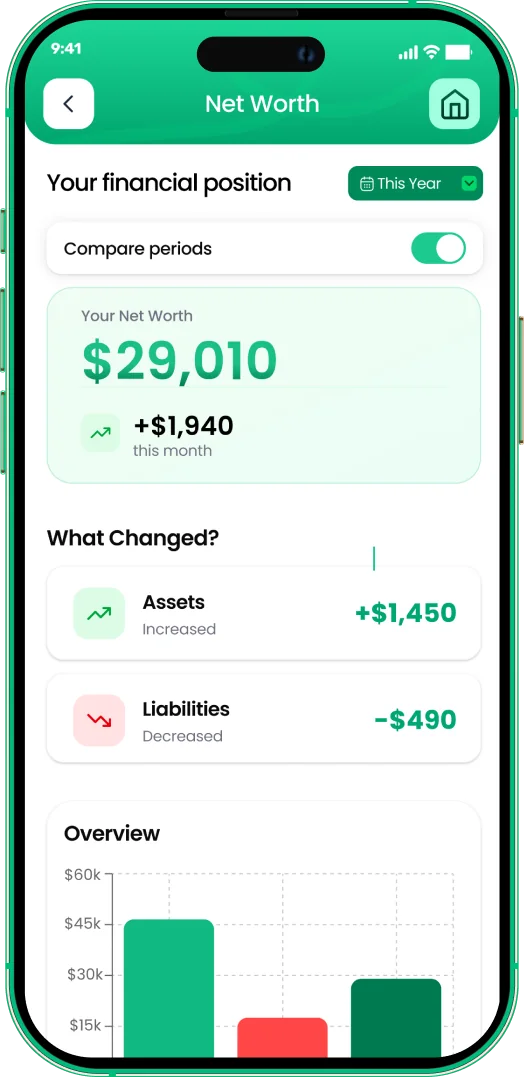
Watch your net worth grow
- Add assets and debts in any of 148 currencies
- See what changed month by month
- Set savings goals and track progress


How RESP withdrawals work
When the child enrols in qualifying post-secondary education, money comes out in two parts. Your original contributions can be withdrawn tax-free. Grants and investment growth come out as Educational Assistance Payments (EAPs), which are taxed as the student's income. Because most students have low incomes, they often pay little or no tax on them.
- Confirm enrolment. The provider needs proof that the student is enrolled in a qualifying program.
- Request an EAP. Ask for grant and growth money to be paid to the student. Limits apply in the first 13 weeks of study.
- Withdraw contributions as needed. These go to you or the student, tax-free.
- Keep receipts. Track tuition, books, housing and transportation so you can plan each withdrawal.
What happens if your child does not go to school?
If the beneficiary does not pursue post-secondary education, you can keep the plan open in case they enrol later, since an RESP can stay open for up to 35 years. You can also name a new beneficiary, such as a sibling, and keep the grants within limits.
If you close the plan, your contributions come back to you tax-free, but the grants must be returned to the government. Investment growth can be withdrawn as an Accumulated Income Payment, which is taxed as income plus an extra 20% tax, unless you transfer up to $50,000 of it to your RRSP when you have enough contribution room.
How to fit RESP contributions into your family budget
The easiest way to save $2,500 a year is about $208 a month by automatic transfer. If that is too much, any amount still earns the 20% grant, and you can catch up on missed grant room later when money allows.
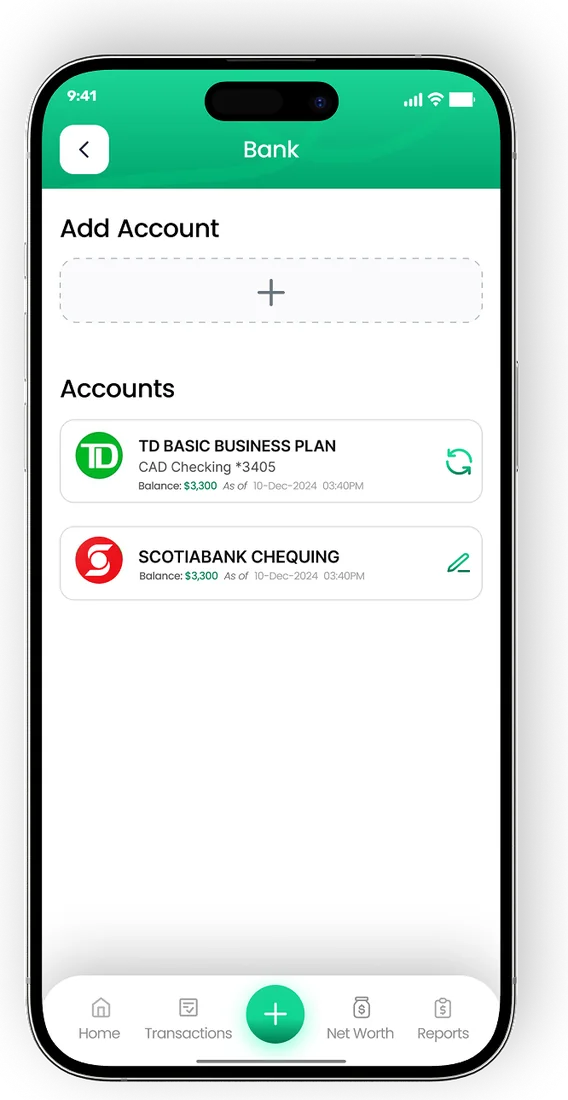
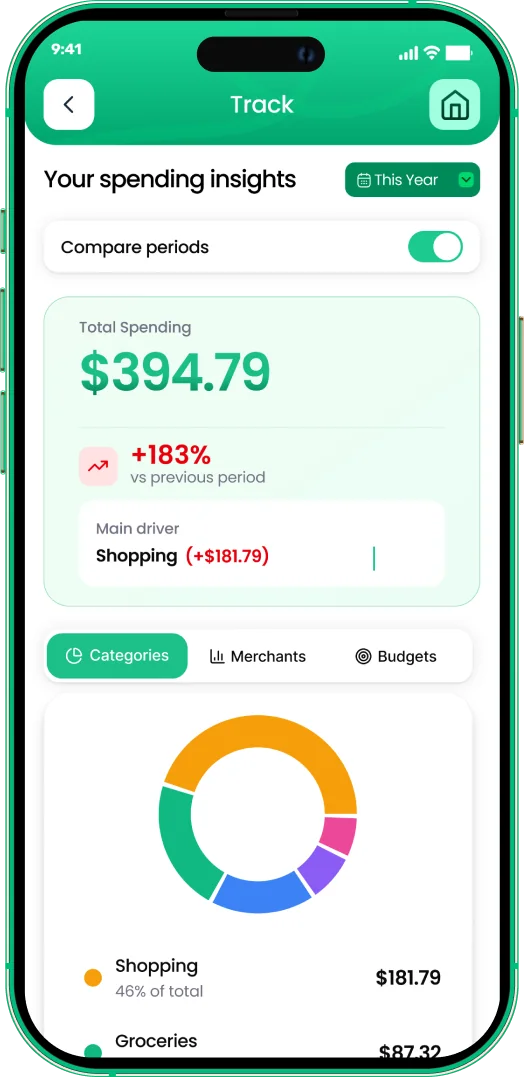
EMOH Pay lets you set a savings goal for each child's RESP, track contributions against it and see the plan in your net worth. With family sharing, both parents see the same numbers from their own logins. It is free to start. For the bigger picture of what children cost, read the cost of raising a child in Canada, and use our savings goal calculator to set a monthly amount. Families receiving the Canada Child Benefit sometimes direct part of it into the RESP.
Your net worth in EMOH Pay
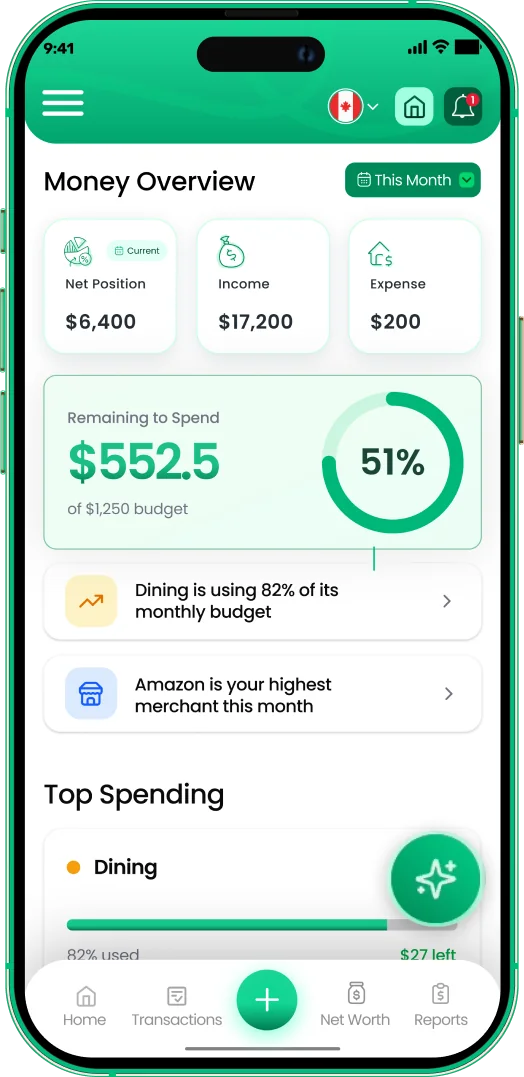

Put the numbers on autopilot
EMOH Pay tracks your spending, budgets and net worth on your phone and in the browser, always in sync. Free to start, made in Canada.
Get started free➜What Is an RESP?: frequently asked questions
How much should I put in an RESP each year?
Many families contribute $2,500 per child each year, which collects the maximum basic grant of $500. Over 14 or 15 years this reaches the $7,200 lifetime grant limit. Any smaller amount still earns the 20% grant.
Can grandparents open an RESP?
Yes. Anyone can open an individual RESP for a child, including grandparents, aunts, uncles or family friends. All plans for the same child share the same $50,000 lifetime contribution limit and the same grant limits.
Is RESP money taxable?
Your contributions come out tax-free. Grants and investment growth are paid as Educational Assistance Payments and taxed as the student's income, which is often low enough that little or no tax is due.
What is the Canada Learning Bond?
It is a federal payment for children born in 2004 or later in low-income families. It starts at $500, adds $100 a year up to $2,000, and does not require any contribution. You only need to open an RESP to receive it.
Can I use an RESP for college or trade school?
Yes. Qualifying programs include university, college, CEGEP, trade schools and apprenticeships, in Canada and many abroad, as long as they meet the program length and enrolment rules.
Sources and further reading
Related guides and tools
What is a TFSA? A plain-language definition of Canada's Tax-Free Savings Account: how it works, what you can hold…
What Is an RRSP?What is an RRSP? A plain-language guide to Canada's Registered Retirement Savings Plan: how the deduction works…
Cost of Raising a Child in CanadaThe cost of raising a child in Canada by age and category, from child care to food and activities, plus the benefits and tax…
Savings Goal Calculator — Free CalculatorHow much to save per month? Enter your target amount and months until deadline — get your required monthly contribution…
Canada Child Benefit CalculatorCanada Child Benefit calculator: enter your family net income and your children's ages to estimate your monthly and yearly…
How to Make a Family BudgetA family budget works when everyone can see it and no one is the money police. Here's the setup that keeps peace and…
Start free today
Free on iPhone, Android and the web. Upgrade to EMOH Pro anytime for bank sync and advanced AI.
Download for iOS➜ Get it on Android➜