
Editorial Guidelines
Money content should be accurate, sourced and easy to check. These are the rules every EMOH Pay guide, calculator page and comparison follows.
Get started free➜ Download the app➜
How does EMOH Pay create content?
EMOH Pay creates content by drafting each page from official sources such as the Canada Revenue Agency, Statistics Canada, CMHC and the Bank of Canada, then having a second team member check every figure, date and link. Numbers are rounded, dated and cited, estimates are labelled, and product mentions are limited to where the app genuinely helps.
What the EMOH Pay editorial policy covers
The EMOH Pay editorial policy applies to everything we publish about money: guides, glossary pages, cost-of-living pages, payment-date pages, calculator explanations and app comparisons. It sets out where information comes from, how it is checked and how we keep it current.
Personal finance is a topic where mistakes cost real money. A wrong tax bracket or an outdated contribution limit can lead to a penalty. So the policy puts accuracy ahead of speed and ahead of sounding confident. The people who apply it are described on our team page, and the company behind them on About EMOH Pay.
How we write: our core principles
How we write comes down to five principles. Each page should answer the reader's question early, use plain language, rely on authoritative sources, show its working and tell readers when a number may have changed.
- Answer first. Each page opens with a direct answer to the question it targets, then adds the detail.
- Plain language. Short sentences, one idea per paragraph and Canadian spelling. Jargon is defined the first time it appears, and our learning hub collects the basics.
- Show the method. Where a number depends on your situation, we explain how to work it out rather than giving a single figure that may not apply.
- Useful before promotional. Pages must help a reader who never downloads the app.
- No hype. No exclamation marks, no guarantees and no pressure to act.
Which sources do we use?
We use primary, authoritative sources first: government departments, national statistics agencies and central banks. Secondary sources are only used for context and are never the sole basis for a figure. Each page lists the main sources it relies on so readers can check them.
| Tier | Examples | How we use them |
|---|---|---|
| 1. Official agencies | Canada Revenue Agency, Statistics Canada, CMHC, Service Canada, Bank of Canada, provincial governments | Tax rules, limits, benefit amounts, rents, prices and interest rates |
| 2. International official sources | National statistics offices and central banks in other countries, such as the ONS and BLS | Figures for international and currency pages |
| 3. Primary company sources | A company's own pricing or feature pages | Competitor features and prices in comparisons, dated at the time of writing |
| Not used as evidence | Anonymous forums, unsourced listicles and figures we cannot trace to an origin | Never quoted as fact |
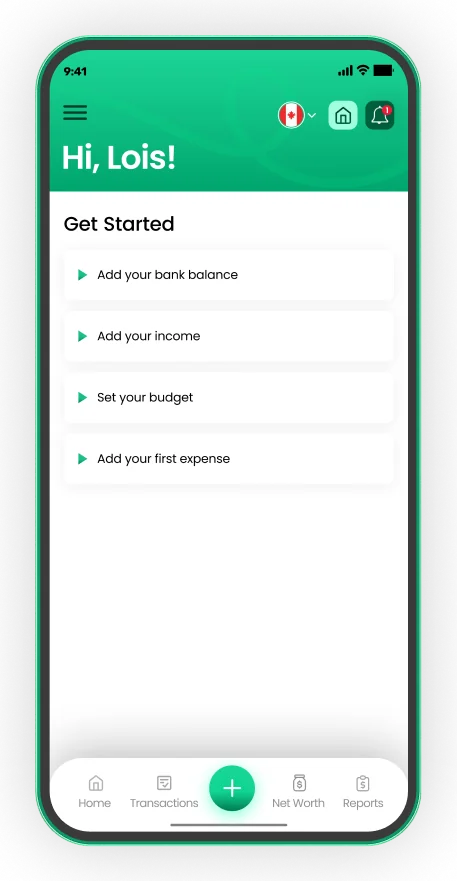
Set up in about five minutes
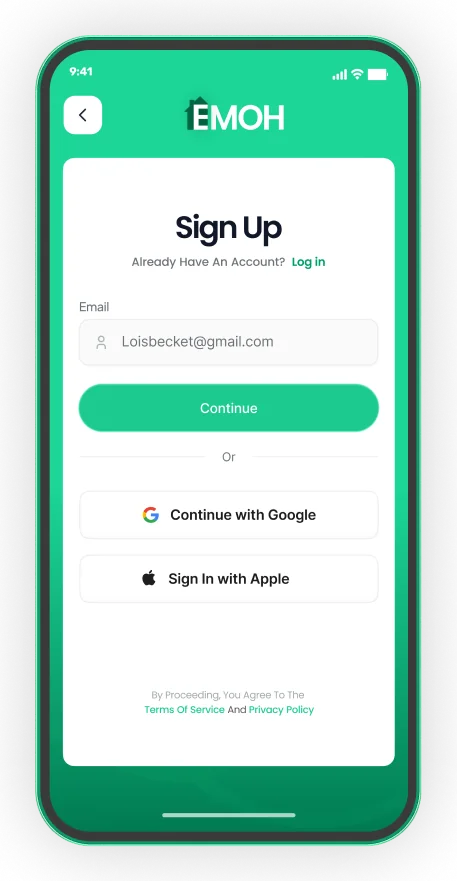
- Sign up with email, Google or Apple
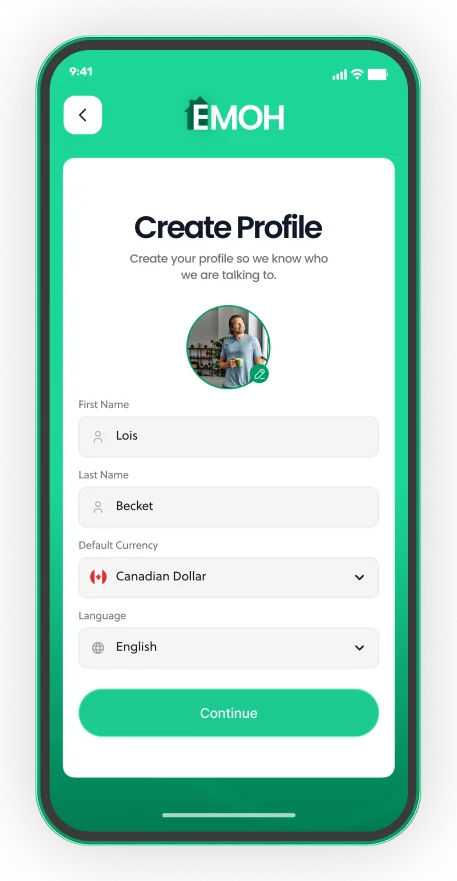
- Pick your default currency and language
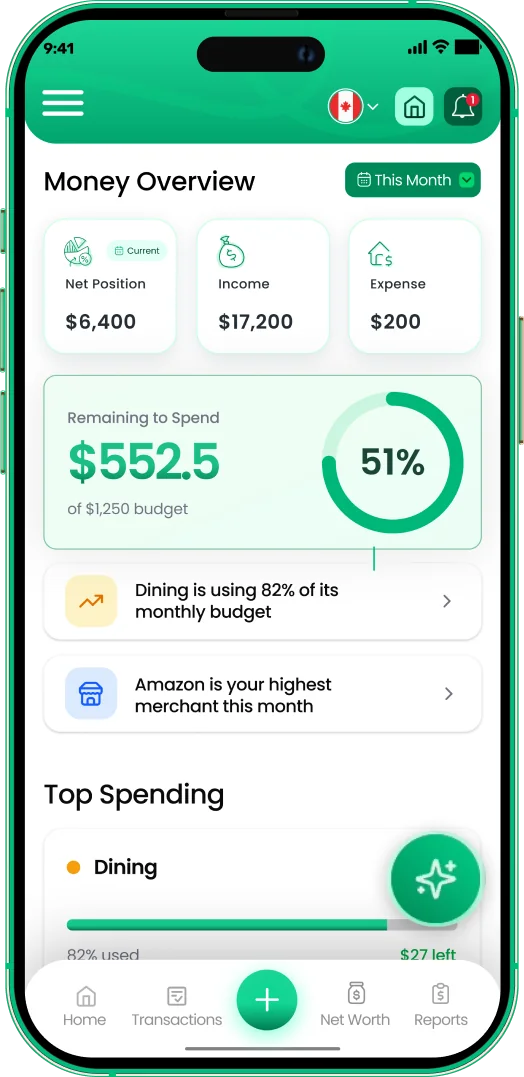
- Add income, a budget and your first expense


How every figure is checked
Every figure is checked by a second team member against its source before a page goes live. Specific amounts are only stated when an authoritative source publishes them. If we cannot confirm a number, we give a range, the method or the factors that drive it instead.
- The writer drafts the page and records the source for every figure, date and rule.
- A reviewer checks each figure against that source and confirms the year it applies to.
- Figures are rounded and marked with words such as "about" where precision would be misleading.
- Amounts that have not yet been published, such as a future year's indexed limit, are labelled as estimates based on indexation.
- Internal and external links are tested, and any broken source is replaced or removed.
- The page is published with a date so readers know when it was last checked.
What we never publish
- Invented numbers. No made-up statistics, surveys, percentages or user counts.
- Fake social proof. No invented reviews, ratings, testimonials or quotes, and no named people who do not exist.
- Personal advice. Pages are general education, not personal financial, tax, legal or investment advice.
- Unconfirmed product claims. We only describe EMOH Pay features that exist today. For example, bank sync on EMOH Pro is described only for Canadian banks, because that is where it is confirmed.
- Disparaging comparisons. Competitors are described fairly, with their strengths stated.
How we handle our own product
EMOH Pay is our product, and we say so. When a page mentions the app, it is because a feature such as budgets, bill tracking or net worth tracking genuinely helps with the task on that page. Most guides mention the app only two to four times.
Comparisons carry an obvious conflict of interest, so they follow extra rules set out in our review methodology. Competitor prices and features are stated as at the time of writing, and readers are encouraged to check the provider's own site before deciding.
Updates and corrections
Pages that depend on yearly figures, such as contribution limits, tax brackets and benefit payment dates, are reviewed when the official source publishes new numbers. Other pages are reviewed on a regular cycle and whenever a reader reports a problem.
If you find an error, please tell us through the contact page with the page address and what looks wrong. We check the report against the source and update the page if a correction is needed. Standards for the app itself are covered separately in our quality standard.
Get started in minutes

Put the numbers on autopilot
EMOH Pay tracks your spending, budgets and net worth on your phone and in the browser, always in sync. Free to start, made in Canada.
Get started free➜Editorial Guidelines: frequently asked questions
Who writes EMOH Pay's guides?
The EMOH Pay Editorial Team drafts every page, and a second team member checks figures, dates and links before it is published.
Is EMOH Pay content financial advice?
No. It is general education based on official sources. For decisions that depend on your situation, speak with a qualified professional or the relevant government agency.
Does EMOH Pay use AI to write content?
Tools may help with drafting, but no page is published without a person checking every figure against an authoritative source and confirming it meets these guidelines.
How often are pages updated?
Pages with yearly figures are reviewed when new official numbers are released. Every page shows the date it was last checked.
How do I report an error?
Send the page address and the issue through our contact page. Each report is checked against the source and the page is corrected where needed.
Sources and further reading
Related guides and tools
Meet the EMOH Pay team at EMOH PAY INC.: who makes EMOH Pay, how the product, security, editorial and support roles work…
How We Rank Budgeting AppsOur budgeting app review methodology: the six criteria we test, how we compare apps fairly, how we handle our own app and…
About EMOH Pay: The Canadian Budgeting AppAbout EMOH PAY INC.: the Canadian company behind EMOH Pay. Track Smart, Spend Smart!. Free budgeting app made in Canada…
Quality StandardThe bar every EMOH Pay release must clear. Free budgeting app made in Canada — Track Smart, Spend Smart on iPhone, Android &…
Money Guides: Budgeting, Saving and DebtPractical, Canadian-first money guides — budgeting, saving, debt, taxes and family finances, all in plain language. Free to…
Contact EMOH Pay: Support, Press and PartnershipsContact EMOH Pay: support, press and partnership channels. Free budgeting app made in Canada — Track Smart, Spend Smart on…
Start free today
Free on iPhone, Android and the web. Upgrade to EMOH Pro anytime for bank sync and advanced AI.
Download for iOS➜ Get it on Android➜