
The True Cost of Owning a Car
The monthly payment is only part of the bill. Here is the full yearly cost of owning a car, from depreciation and insurance to fuel, tires and parking, with a method to price your own.
Get started free➜ Download the app➜
How much does a car really cost per year?
The true cost of owning a car in Canada is about $9,000 to $15,000 a year for a newer financed car, and about $4,500 to $8,000 for an older paid-off one, once depreciation, insurance, fuel, maintenance, registration and parking are counted. Insurance and depreciation usually outweigh fuel. These are illustrative estimates, not an official statistic.
How much does it cost to own a car?
The cost of owning a car in Canada is usually $750 to $1,250 a month for a newer financed vehicle, and roughly $375 to $650 a month for an older car you own outright. The difference comes mainly from depreciation and loan interest, which shrink as a car ages, while insurance, fuel and upkeep stay.
Most people underestimate the total because they only budget for the payment and gas. The costs that arrive once or twice a year, such as registration, winter tires and repairs, are the ones that break a budget.
The ranges on this page are illustrative, built from typical Canadian costs in 2026, and are not an official statistic. Your province, driving distance, age and driving record change the answer a lot. Treat the method as the useful part, and add your car to your list of monthly expenses once you have priced it.
Cost of owning a car: yearly breakdown
Eight costs make up the true cost of car ownership. Two of them, depreciation and interest, never show up as a bill, which is why they are easy to forget.
| Cost | Newer financed car | Older paid-off car |
|---|---|---|
| Depreciation (loss in value) | $3,000 to $6,000 | $500 to $1,500 |
| Loan interest | $800 to $2,000 | $0 |
| Insurance | $1,500 to $3,000 | $1,200 to $2,500 |
| Fuel or charging | $1,500 to $3,000 | $1,500 to $3,000 |
| Maintenance and repairs | $500 to $1,000 | $800 to $2,000 |
| Tires, including winter tires | $200 to $400 | $200 to $400 |
| Registration and licence | $100 to $300 | $100 to $300 |
| Parking, tolls, car washes | $0 to $2,400 | $0 to $2,400 |
| Typical total | about $9,000 to $15,000 | about $4,500 to $8,000 |
Few owners hit the top of every line at once, so the typical totals sit inside the full low-to-high spread. Parking is the wild card: free in most suburbs, but a monthly downtown spot in a large city can add more than the fuel bill.
The hidden costs of car ownership
The biggest hidden cost of owning a car is depreciation, the value it loses each year. A new car loses value fastest in its first few years, so you pay for that loss when you sell or trade it in, even though no bill arrives.
Depreciation
Estimate it by comparing what you paid with what similar cars of the same age sell for today. Buying a car that is a few years old lets the first owner absorb the steepest drop.
Interest
Interest is the price of borrowing. A longer loan lowers the monthly payment but raises the total interest you pay. Our car loan calculator shows the full interest on any loan.
Insurance
In BC, Saskatchewan and Manitoba basic auto insurance comes from a public insurer, and in Quebec a public plan covers bodily injury. Elsewhere private insurers set premiums. Your age, record, postal code and vehicle all matter, so get quotes before you buy.
Repairs as a car ages
An older car saves on depreciation but usually needs more repairs. Setting aside a fixed amount each month turns a surprise $1,200 repair into a planned one.
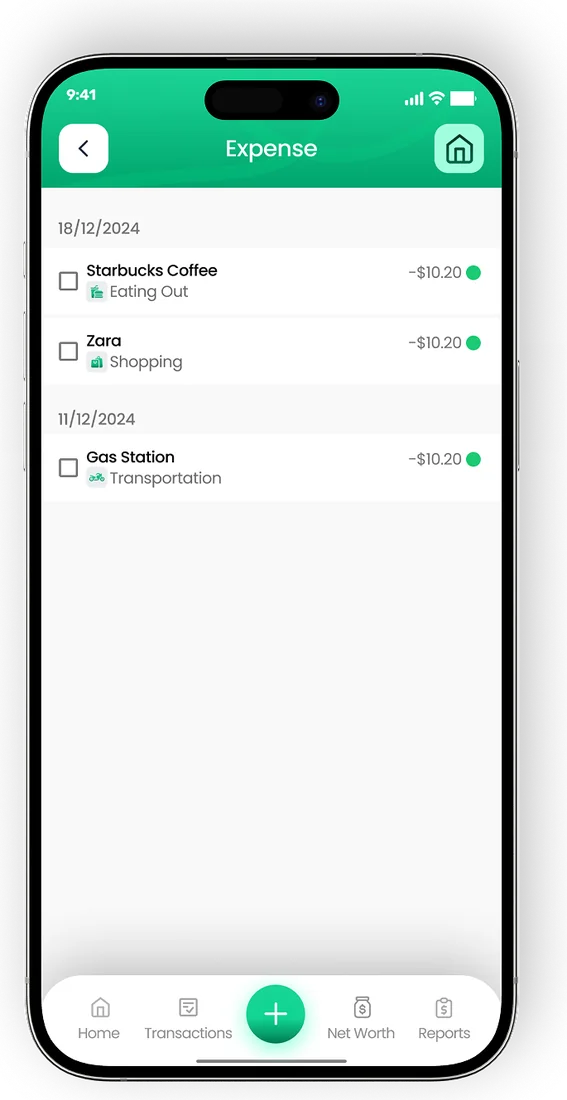
Log a purchase in two taps
- Smart categories sort every transaction
- Tag who spent what in a shared household
- Export PDF or Excel reports any month


How to calculate your own cost of owning a car
Add up each yearly cost for your specific car, then divide by 12 for a monthly figure and by the kilometres you drive for a cost per kilometre. It takes about 20 minutes with your insurance renewal, loan statement and a fuel estimate.
- Estimate depreciation: purchase price minus the likely resale value, divided by the years you plan to keep the car.
- Add a year of loan interest from your loan statement or a loan calculator.
- Add your annual insurance premium and registration fee.
- Estimate fuel: kilometres per year times the car's fuel use per 100 km, divided by 100, times the price per litre. For example, 15,000 km at 8 L/100 km at an assumed $1.50 a litre is about $1,800.
- Add maintenance, tires and a repair set-aside, plus parking and tolls.
- Divide the total by 12 for a monthly car budget, and compare it with your take-home pay.
Natural Resources Canada publishes official fuel consumption ratings for new vehicles, which make step four more accurate. If you are still shopping, the car affordability calculator shows what price fits your income.
Is it cheaper to buy, lease or go car-free?
Keeping a reliable car for many years after the loan is paid is usually the cheapest way to own one, because depreciation and interest shrink. Leasing often has lower payments but means a payment that never ends. Going car-free can be cheapest of all in cities with good transit.
Compare the options by total yearly cost, not monthly payment. Our article on financing versus leasing a car in Canada goes deeper on that choice. For a car-free comparison, add a monthly transit pass, occasional car-share or rental days and taxis, then set that against the typical total above.
How to budget for a car
Split car costs into three budget lines: the fixed monthly payment and insurance, a variable line for fuel and parking, and a sinking fund for registration, tires and repairs. That way the irregular costs are already saved when they arrive.
- Keep all car costs under about 15 to 20% of take-home pay. That is a common guideline, not a rule, and high-rent households may need to aim lower.
- Track fuel for a month. Real fuel spending is often higher than people guess. See our tips on managing fuel and gas expenses.
- Fund repairs monthly. A set amount into a sinking fund each month smooths out repair bills.
- Review at insurance renewal. Shop around each year and ask about discounts.
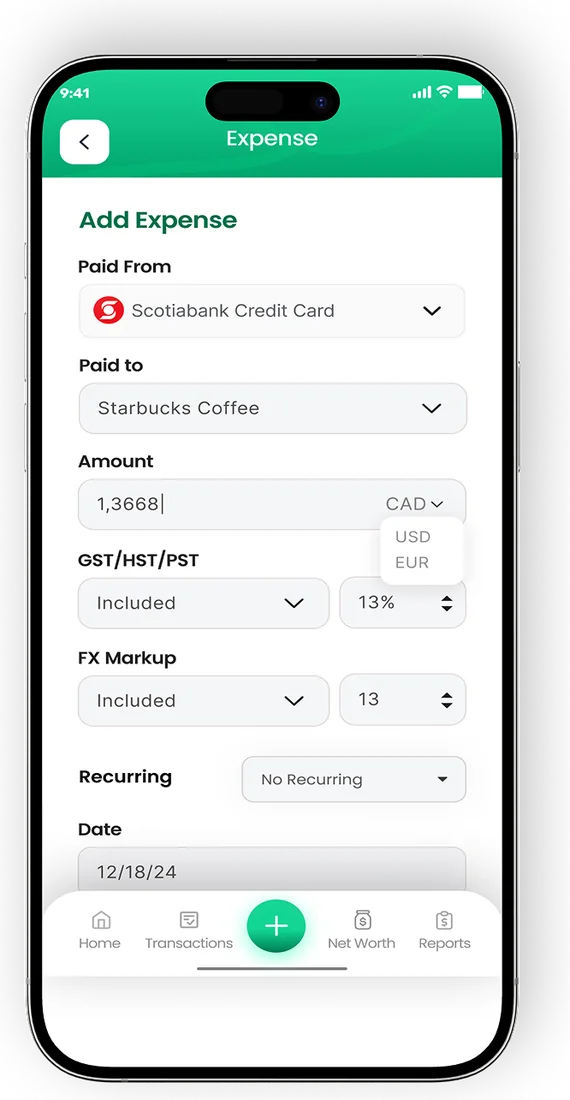
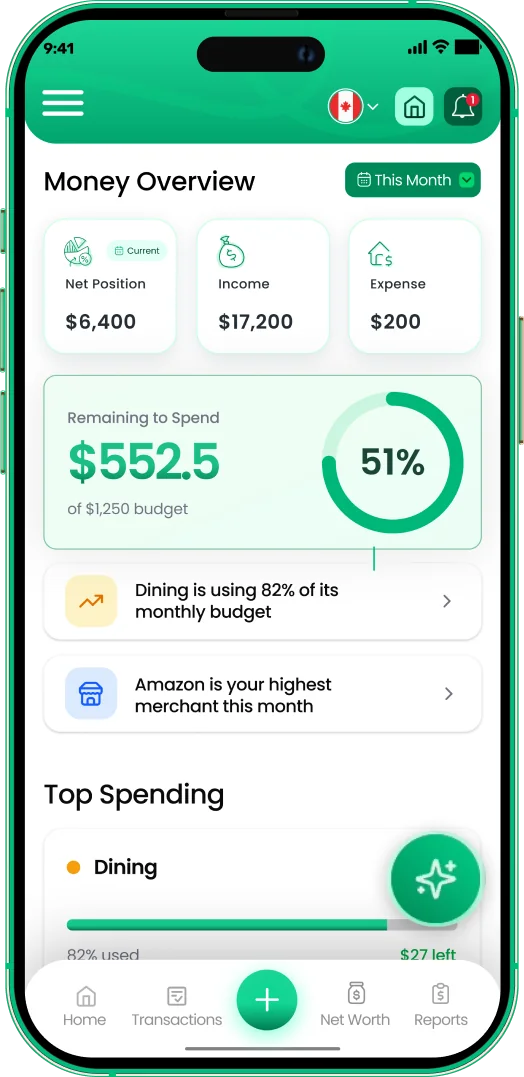
EMOH Pay helps by grouping every car expense into one Transportation budget with overspend alerts, and a savings goal can hold your repair fund. With EMOH Pro, Canadian bank and card transactions sync automatically through Plaid, so gas station and parking charges land in the right category without typing.
Track every dollar
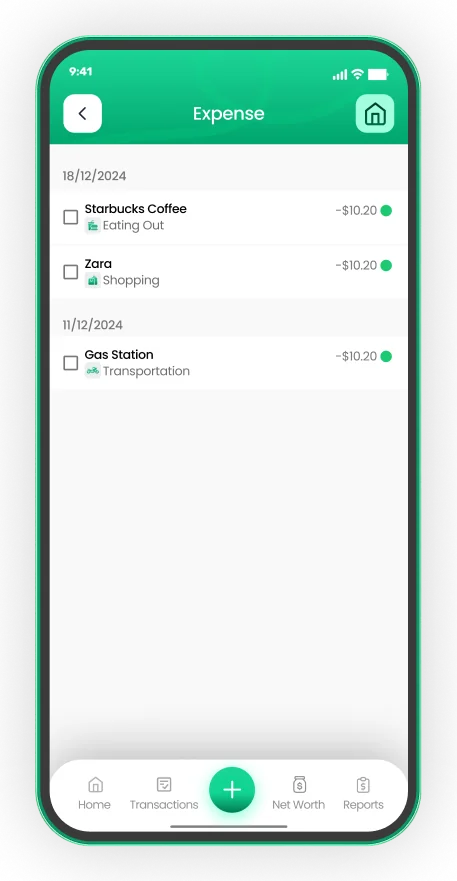

Put the numbers on autopilot
EMOH Pay tracks your spending, budgets and net worth on your phone and in the browser, always in sync. Free to start, made in Canada.
Get started free➜The True Cost of Owning a Car: frequently asked questions
How much does a car cost per month in Canada?
A newer financed car typically costs about $750 to $1,250 a month once insurance, fuel, maintenance, depreciation and interest are included. An older paid-off car usually costs about $375 to $650 a month.
What is the biggest cost of owning a car?
For a new or nearly new car, depreciation is usually the biggest cost, followed by insurance. For an older car, insurance, fuel and repairs are the largest lines.
Is an electric car cheaper to own?
Charging at home usually costs less than gasoline per kilometre, and there is less routine maintenance. The purchase price and insurance can be higher, so compare the total yearly cost for the specific models you are considering.
How can I lower the cost of owning a car?
Buy a reliable used car, keep it for many years, shop for insurance at every renewal, keep tires properly inflated, and combine trips. Choosing a home near transit can remove the need for a second car.
Should I include depreciation in my budget?
It does not appear as a monthly bill, but it is a real cost you pay when you sell or trade in. Including it helps you compare buying new, buying used and leasing fairly.
Related guides and tools
How much car can I afford? Enter your take-home pay, down payment, rate and term to see a comfortable car price that keeps…
Car Loan Calculator CanadaFree car loan calculator for Canada. Add price, sales tax, down payment, rate and term to see your monthly payment, total…
Financing vs Leasing a Car in Canada: Which Option Is Best?Buying a car is an important financial decision. But before you select the ideal model, there’s another important question…
Monthly Expenses Checklist: The Full List of Monthly ExpensesA complete list of monthly expenses to build your budget: housing, bills, food, transport, debt, savings and the irregular…
Sinking Funds: What They Are and How to Use ThemSinking funds turn big irregular costs into small monthly savings. Learn how they work, common sinking fund categories, a…
50/30/20 Budget CalculatorThe 50/30/20 rule splits after-tax income: 50% to needs, 30% to wants, 20% to savings. Enter your monthly take-home pay to…
Start free today
Free on iPhone, Android and the web. Upgrade to EMOH Pro anytime for bank sync and advanced AI.
Download for iOS➜ Get it on Android➜