
Car Affordability Calculator: How Much Car Can I Afford?
Enter your monthly take-home pay, down payment, loan rate and term. The calculator caps the loan payment at 10% of take-home pay and turns that into a car price you can carry comfortably.
Use the calculator➜ Try EMOH Pay free➜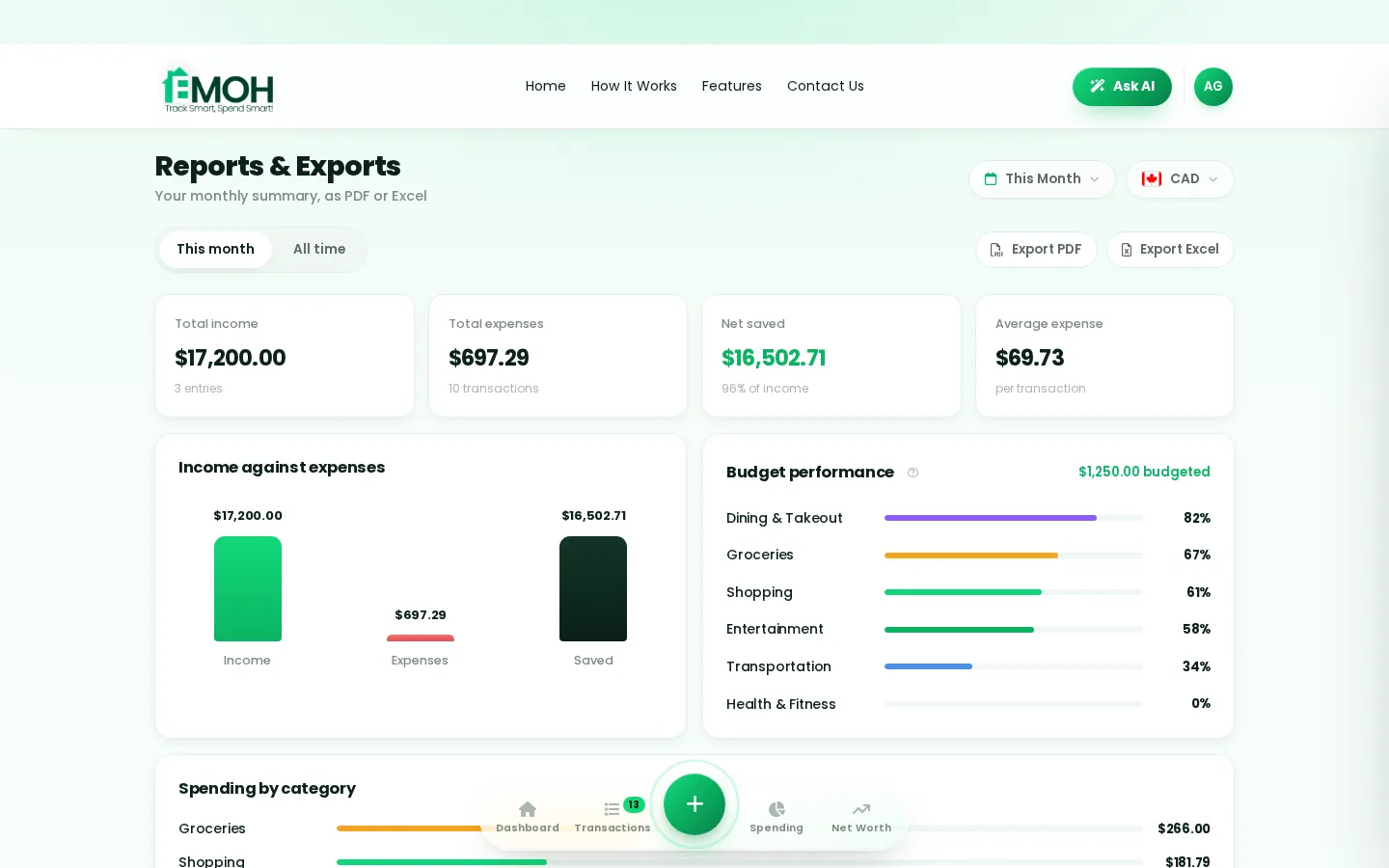
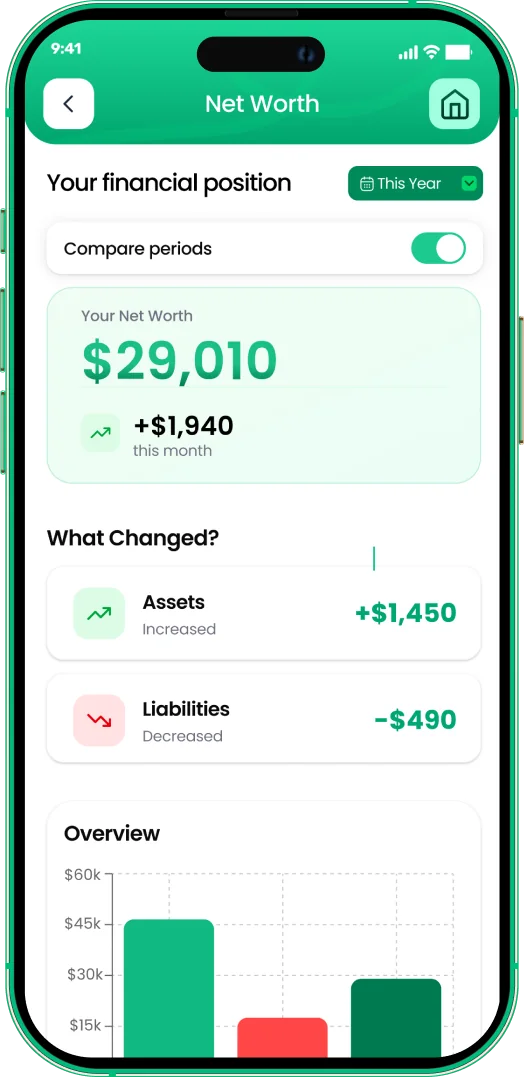
How much car can I afford on my salary?
A common guideline is to keep your car loan payment at or below 10% of monthly take-home pay and all car costs, including insurance and fuel, under 15 to 20%. On $4,500 a month take-home, that is a $450 payment, which at 7% over 60 months buys a car of about $22,700 plus your down payment.
How much car can I afford? The short method
Work out how much car you can afford from your monthly take-home pay, not your gross salary. Take 10% of your net monthly pay as the most you should spend on a loan payment. Then work backwards through the interest rate and loan term to find the loan that payment supports, and add any cash or trade-in you are putting down.
That number is a comfortable ceiling, not a target. Lenders will often approve a bigger loan than this, because they look at your gross income and your total debt rather than whether the payment leaves room for savings. Our debt-to-income ratio calculator shows how a new car payment changes the figure lenders see.
If the comfortable price is lower than the car you need, the simplest fix is a bigger down payment. Setting it up as a savings goal in EMOH Pay shows how many months of saving close the gap, and each extra $1,000 down raises your budget by the same amount without raising the payment.
How to use the car affordability calculator
- Monthly take-home income. Enter what actually lands in your account each month after tax and payroll deductions. For a couple sharing one car, use combined take-home pay.
- Down payment or trade-in. Enter any cash you will put down plus the value of a vehicle you are trading in, minus anything still owing on it.
- Loan rate (%). Use the rate your bank or dealer quoted. If you have not been quoted yet, run a few rates to see how much the price moves.
- Loan term (months). Enter the length of the loan. The calculator uses 60 months if you leave it blank.
- Read the result. The comfortable car price is the loan your 10% payment supports plus your down payment. Treat it as an all-in figure that must cover sales tax, fees and any add-ons.
The calculator also reminds you to budget separately for insurance, fuel and maintenance. It uses a rough planning allowance of about $300 to $450 a month, but these costs vary widely with where you live, your driving record and the vehicle, so get a real insurance quote before you buy.
Car budget by income: what the 10% rule allows
The table below applies the 10% payment cap at a 7% interest rate. It shows the loan amount each payment supports over four, five and six years, before any down payment is added.
| Monthly take-home | Max payment | 48 months | 60 months | 72 months |
|---|---|---|---|---|
| $3,000 | $300 | $12,500 | $15,200 | $17,600 |
| $4,000 | $400 | $16,700 | $20,200 | $23,500 |
| $5,000 | $500 | $20,900 | $25,300 | $29,300 |
| $6,000 | $600 | $25,100 | $30,300 | $35,200 |
| $8,000 | $800 | $33,400 | $40,400 | $46,900 |
Longer terms make a bigger car look affordable, but you pay more interest and stay in negative equity for longer, where you owe more than the car is worth. If a car only fits your budget at 84 months, it is usually a sign to look at a cheaper model.
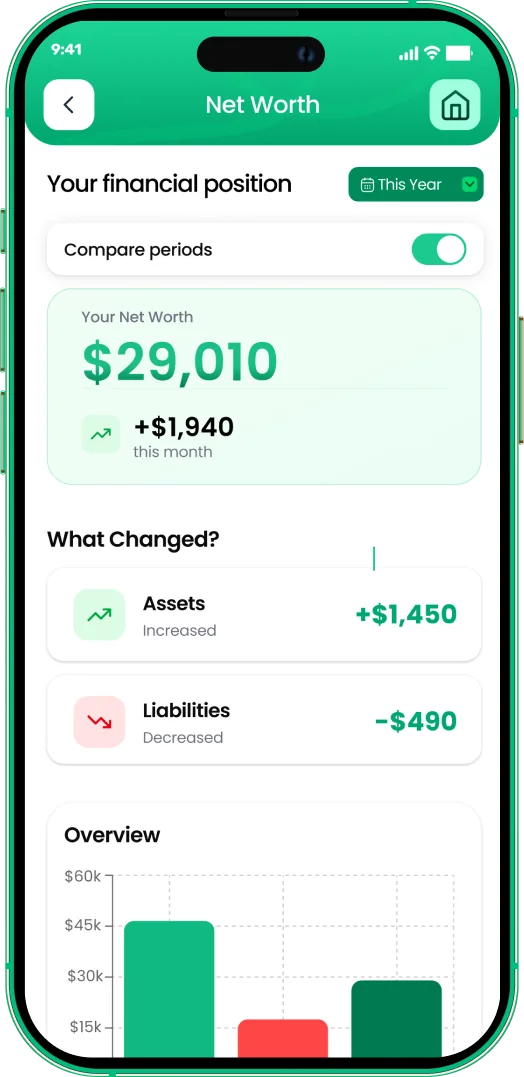
Watch your debt shrink
- Track loans, cards and your mortgage as liabilities
- See what changed each month
- Budget an extra payment into every month


What is the 20/4/10 rule for buying a car?
The 20/4/10 rule is a rule of thumb for car buying: put at least 20% down, finance for no more than four years, and keep total monthly car costs under 10% of your income. It is not an official standard, but it is a sensible stress test that keeps a car from crowding out savings.
Many people cannot meet all three parts, especially with new-car prices where they are. A practical version is to keep the loan payment near 10% of take-home pay and all-in car costs under 15 to 20%, which is what this calculator is built around. If you finance longer than four years, try to put more down so you are not owing more than the car is worth.
The full cost of a car beyond the payment
The loan payment is only part of the bill. Before you settle on a price, add up the running costs that come with any vehicle.
- Insurance. Often the second-largest cost, and it depends heavily on your age, postal code and driving history.
- Fuel or charging. Estimate your weekly kilometres and current prices near you.
- Maintenance and tires. Oil changes, brakes and a second set of tires for winter in much of Canada.
- Registration, licence and parking. Annual fees and any monthly parking at home or work.
- Depreciation. Not a monthly bill, but a new car loses value quickly in its first few years, which matters when you sell or trade.
Our guide to the cost of owning a car breaks these down in detail. If you already know the car you want, the car loan calculator for Canada adds provincial sales tax and shows total interest.
Should I buy new, used or lease?
A reliable used car usually stretches the same budget much further, because the first owner absorbed the steepest depreciation. New cars sometimes come with lower promotional rates, which can narrow the gap, so compare the total cost over the years you plan to keep the car rather than the monthly payment alone.
Leasing gives a lower payment but you own nothing at the end and pay for excess kilometres and wear. It can suit people who want a new car every few years and drive predictable distances. For most budgets, buying a car you can keep for many years costs less overall.
Whichever you choose, track the real cost once you own it. EMOH Pay lets you set a transportation budget with overspend alerts and record fuel, insurance and repairs as they happen, so you can see whether the car still fits after the first year. The features page shows how budgets and bill tracking work.
Pay it down with EMOH Pay
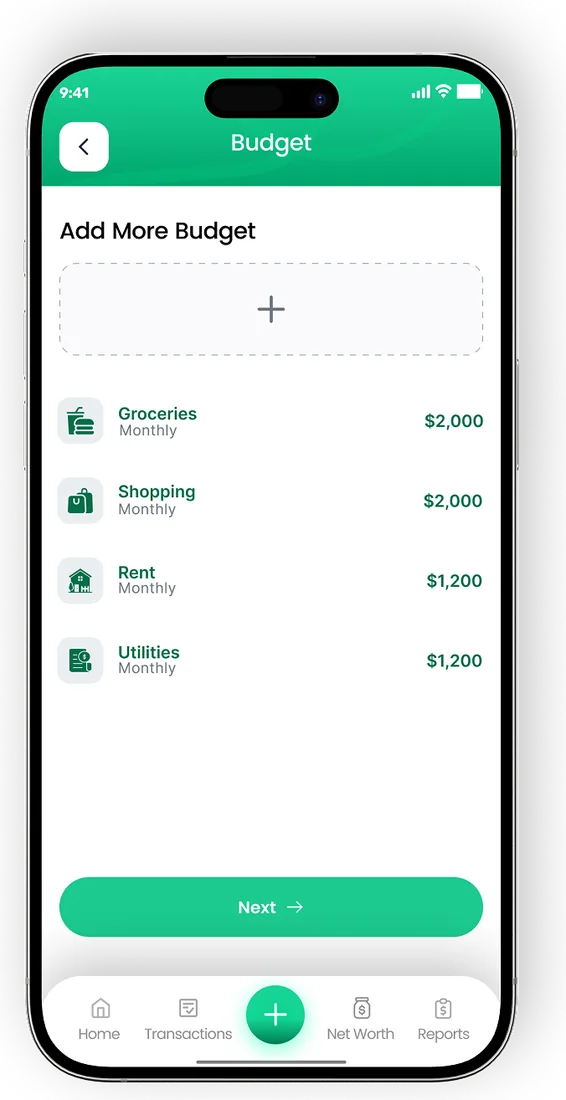
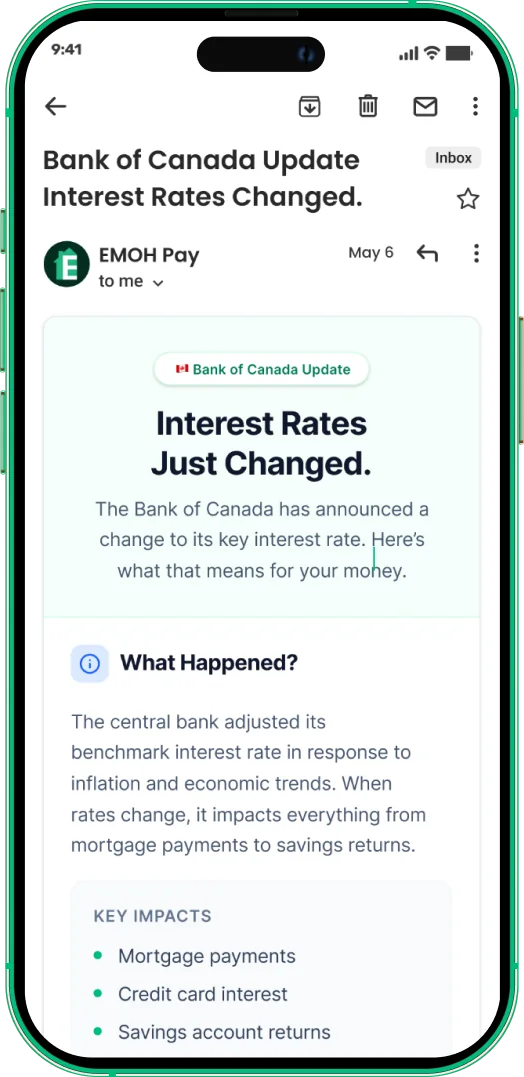
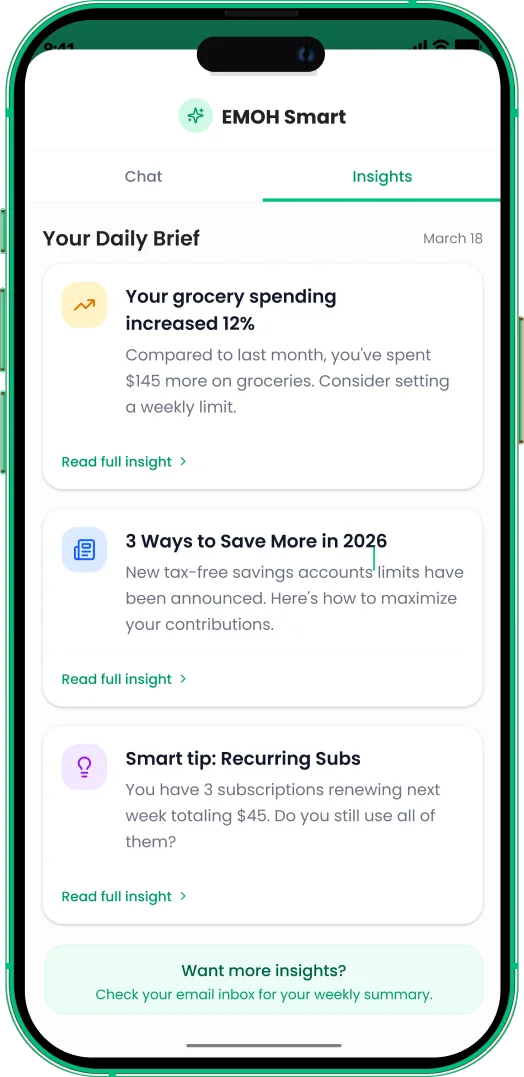

Put the numbers on autopilot
EMOH Pay tracks your spending, budgets and net worth on your phone and in the browser, always in sync. Free to start, made in Canada.
Get started free➜Car Affordability Calculator: How Much Car Can I Afford?: frequently asked questions
Should I use gross or net income to decide how much car I can afford?
Use net, or take-home, income. It reflects the money you actually have to spend each month. Lenders use gross income when they approve a loan, which is why an approval can be larger than what is comfortable.
How much car can I afford on $60,000 a year?
It depends on your province and deductions, but a $60,000 salary often leaves roughly $3,700 to $4,000 a month after tax. At 10% that is a payment near $400, which at 7% over 60 months supports a loan of about $20,000 plus your down payment.
Does the car price include sales tax?
Treat the calculator's result as an all-in price. Sales tax, dealer fees and add-ons all come out of it, so the sticker price you can shop for is lower than the result.
What loan term is best for a car?
Shorter terms cost less interest. Four to five years is a common balance between a manageable payment and total cost. Terms of seven years or more keep payments low but often leave you owing more than the car is worth for years.
Should I pay off debt before buying a car?
If you carry high-interest credit card debt, paying it down first usually saves more than any car deal. A new car payment also raises your debt-to-income ratio, which matters if you plan to apply for a mortgage soon.
Sources and further reading
Related guides and tools
Free car loan calculator for Canada. Add price, sales tax, down payment, rate and term to see your monthly payment, total…
The True Cost of Owning a CarThe true cost of owning a car goes far past the payment. See a yearly breakdown of depreciation, insurance, fuel…
Loan Payment CalculatorFree loan payment calculator: enter the amount, interest rate and term to see your monthly payment, total interest and total…
Debt-to-Income Ratio CalculatorFree debt to income ratio calculator: enter gross income, housing costs and debt payments to see your DTI, housing ratio and…
50/30/20 Budget CalculatorThe 50/30/20 rule splits after-tax income: 50% to needs, 30% to wants, 20% to savings. Enter your monthly take-home pay to…
EMOH Pay Features — Budgets, Tracking, AI & MoreAll EMOH Pay features: expense tracking, budgets, net worth, Ask AI, family sharing, GST/HST, multi-currency and more. Free…
Start free today
Free on iPhone, Android and the web. Upgrade to EMOH Pro anytime for bank sync and advanced AI.
Download for iOS➜ Get it on Android➜