Can Easy Budgeting Tips for Beginners Help You Get Out of Debt?

Managing personal finances can be challenging, particularly for those who are just starting. However, with the right approach, some easy budgeting tips can assist you in gaining full control over your money and subsequently reducing stress as well as getting out of debt.
Once you are dealing with credit card bills, student loans, and other financial duties, you should start making a budget. This is the very first thing towards freedom in financial matters. This is a practical tip for a budgeting newbie in this blog that is easily applied and will prove useful for helping you attain that debt-free lifestyle of budgeting.
Why Budgeting Matters for Beginners
Before getting started with the easy budgeting tips, it’s vital to understand why budgeting is important. A budget is an important plan for your money; it helps you track your income, expenses, and savings. For beginners, budgeting can feel terrifying, but it doesn’t have to be. By following easy budgeting tips for beginners, you can develop a system that suits your lifestyle and financial goals.
Budgeting is especially important if you want to get out of debt. Without a clear plan, it’s easy to spend more, miss payments, or fall deeply into debt. A well-developed budget ensures that you have enough money to pay off your debts while still taking care of your important expenses.
Easy Budgeting Tips
Here are a few easy budgeting tips to help you get started on the route to financial freedom.
1. Track Your Income and Expenses
Make a budget by seeing where your money comes from and where it is going. Make a list of your income. List your pay, freelance income, side work, and more. Track expenses for one month. That should cover fixed costs, which are rent, utilities, and loan payments. Also, your variable expenses, which may include your groceries, your entertainment, eating out, among others.
Monitoring spending will help you understand your habits and where you can cut back. Nowadays, many applications and tools can help simplify this process, like Mint, YNAB (You Need A Budget), or even a simple spreadsheet.
2. Set Realistic Financial Goals
Setting specific goals is imperative when you begin. You will be more motivated if you tell yourself you would like to eliminate a certain kind of debt or save for the emergency fund and stop living paycheck to paycheck. Divide them into smaller, workable steps. For instance, if you desire to pay off $5,000 in credit card debt, aim to pay off $500 per month.
3. Use the 50/30/20 Rule
One of the most used beginner budgeting tips is the 50/30/20 rule. The very easy three-tier formula will make sure to use a chunk of after-tax money to cater for: 50% on needs: Rent, utilities, groceries, transportation, and many others. 30% on Wants: Money used to be spent on Dining out, entertainment and many hobbies 20% for savings and repaying the loans: building your emergency fund, your retirement account, and repayment of loans.
The rule is magnificent for any beginner because it’s easy to follow and flexible enough to adapt to your lifestyle.
4. Cut Unnecessary Expenses
Once you track your spending, then you should find areas to cut back. Do you need to buy a coffee every day at the café or can you prepare it at home? Do you subscribe to services that rarely get used on the streaming platform? Small changes over time add up and free up more money for debt repayment or savings.
5. Prioritize Debt Repayment
Everyone in debt should pay it off as soon as possible; there are popular methods available. There are two major methods for debt repayment:
Debt Snowball Method: Pay off those smallest debts in the first steps, making payments on larger amounts only enough to keep them rolling. Once you have fully paid off this smallest debt, proceed to the next smallest one.
Debt Avalanche Method: This method is all about paying off debts with the highest interest rates first because it will save you money in the long run.
Choose one that suits you best and follow it. The ultimate goal is to achieve debt-free budgeting.
6. Build an Emergency Fund
Unexpected expenses can knock even the best budget off track. This is why building an emergency fund is so important. Save enough to cover three to six months of living expenses. Start small; even saving $500 can provide a cushion for minor emergencies.
7. Automate Your Savings and Payments
Automation transforms the experience for beginners. One can set up automatic transfers into a savings account and automatic payments for bills and debts. In this way, one saves constantly and avoids late fees.
8. Review and Adjust Your Budget Regularly
Your budget is not static. Life changes, and so the budget should too. Review your budget monthly to check if you are on the right track with your goals. If you are spending more in one category, adjust the other one to compensate.
9. Stay Motivated and Celebrate Small Wins
Budgeting can feel so restrictive sometimes but don’t lose focus. Reward small victories, like paying off that credit card or saving for that savings goal. These small wins will keep you focused on those long-term financial goals.
How Easy Budgeting Tips Can Help You Get Out of Debt
The easy budgeting tips mentioned above can help beginners start easy budgeting that can assist them in gaining a strong financial foundation for existing debt. Budgeting gives one control over his money, reducing unnecessary spending, and thus giving more to pay off debt. Gradually, you will be able to reduce your debt amount and save a good sum.
Personal Finance for Beginners: Final Thoughts
Budgeting doesn’t have to be complicated. Follow these easy budgeting tips for beginners and learn your way to financial freedom. Remember, the secret to budgets lies in constancy and self-control. Stick to your plan, make adjustments when necessary, and don’t hesitate to seek help if you find it too tough to handle. Emohpay helps you stay in control of your budget, track expenses, and build a strong financial future with ease
By incorporating these easy budgeting tips into your daily life, you will enhance your financial management and feel good knowing that you are working toward a debt-free future. Remember, personal finance for beginners is all about taking small, consistent steps. With time and effort, you’ll see significant progress and be well on your way to financial stability.
Try the free budget calculator
Reading is step one — EMOH Pay makes it automatic. Free to start on phone and web.
Open it➜What should you know about everyday budgeting?
Everyday budgeting comes down to three habits: know what comes in, decide where it goes, and check in daily. EMOH Pay makes all three effortless — free expense tracking and budgets on phone and web, a Daily Money Digest each morning, and bank-grade AES-256 security throughout.
Everyday budgeting: the essentials
You can start everyday budgeting today at $0 — no card required, on iPhone, Android or the web.
Auto-categorization, recurring bills and bank sync take the admin out of the habit.
The first win in everyday budgeting is simply seeing where money goes. Tracking alone typically surfaces 10–15% of easy savings.
Money works better as a team sport — shared live numbers end the guesswork and the arguments.
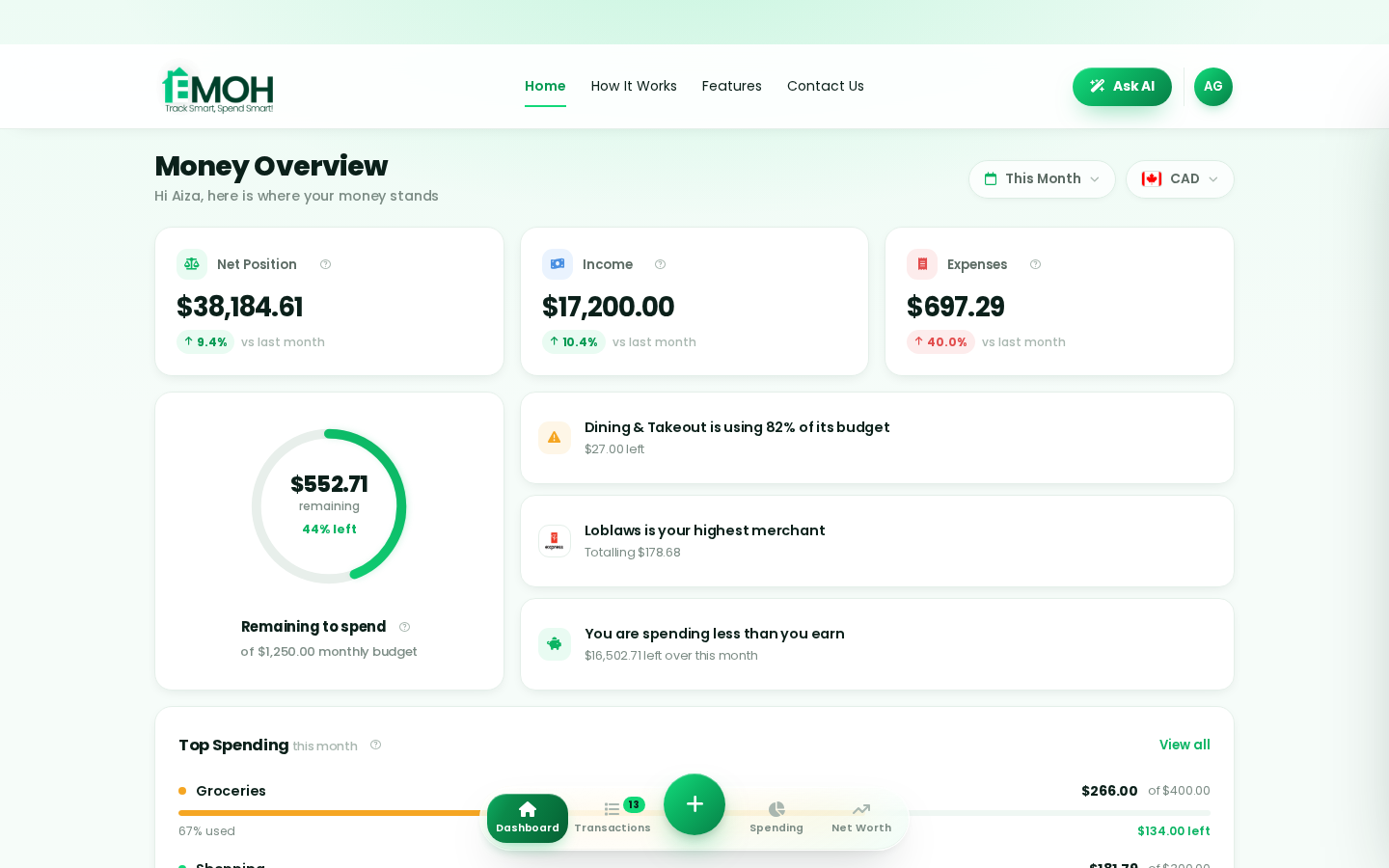
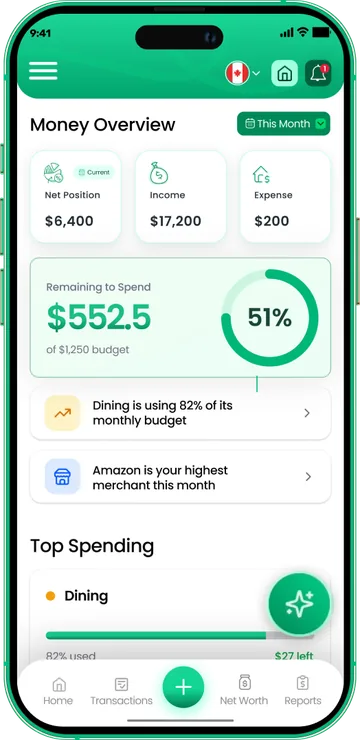
One app for everyday budgeting — on every screen.
Track on your phone in the checkout line, review on the web app at your desk. EMOH Pay keeps everyday budgeting in sync the second anything changes, so the numbers you act on are always current.
Start free on the web➜ Explore all features➜Real spending, really tracked
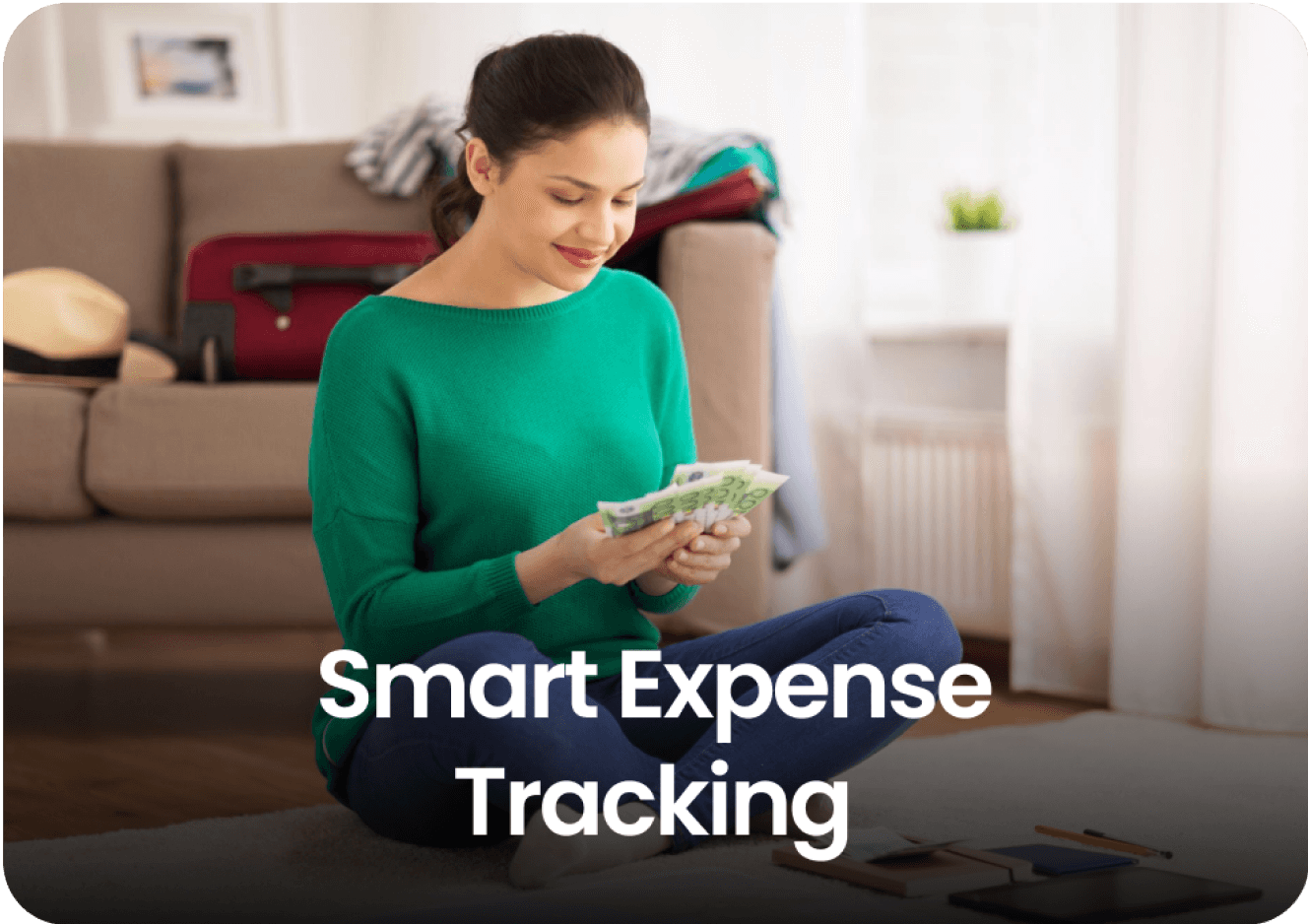
From the morning coffee to the monthly rent — Canadians log, tag and learn from every expense on EMOH Pay.

Everything you need for everyday budgeting
Track Smart, Spend Smart! The complete toolkit, free to start:
Log any expense in two taps — or let bank sync do it automatically. Every dollar gets a category.
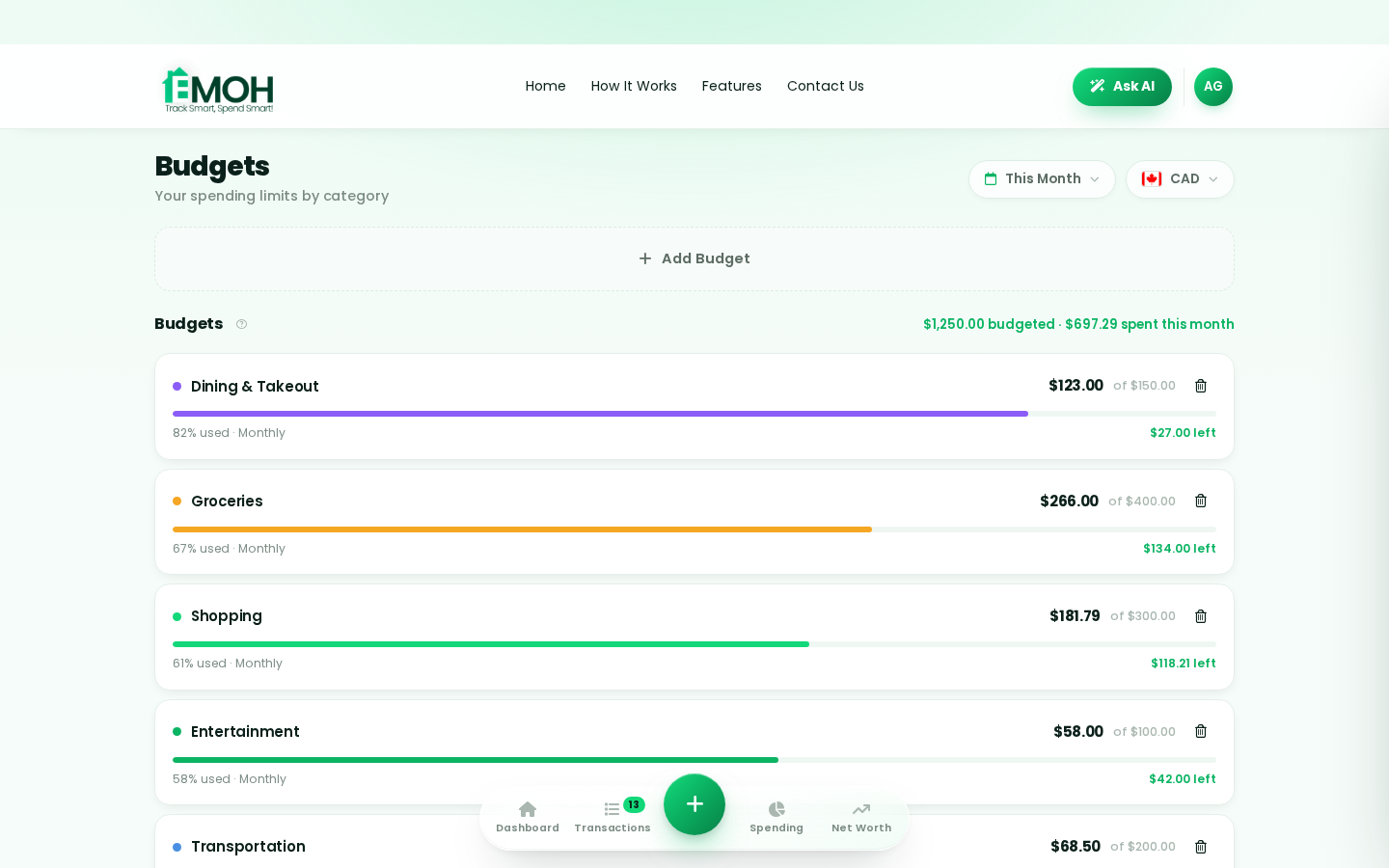
Digital envelopes for groceries, rent and fun, with gentle alerts before you overspend.
Assets minus debts, always current — watch the number that actually measures progress.
Turn any month into a clean report you can share with a partner or accountant.
Automatic conversion for money that lives in more than one country.
One calm summary every morning: what you spent, what's left, what needs attention.
How to start everyday budgeting with EMOH Pay
Four small steps, five minutes total:
EMOH Pay vs. the usual ways to handle everyday budgeting
| EMOH Pay | Spreadsheet | Typical budgeting app | |
|---|---|---|---|
| Free tier | Free forever | Free | Limited trial |
| Paid tier | EMOH Pro — $4.99/mo | — | $10–15/mo |
| Expense tracking | ✔ Two taps or automatic | Manual entry | ✔ |
| Budgets & overspend alerts | ✔ Built in | ✖ None | Varies |
| Net worth tracking | ✔ Live | Formula gymnastics | Often paid add-on |
| Phone + web sync | ✔ Instant | ✖ Manual | Varies |
| Family sharing | ✔ Free | ✖ Shared-file chaos | Often paid add-on |
| GST/HST tracking | ✔ Automatic | ✖ Formula gymnastics | ✖ Rare |
| 148 currencies | ✔ Automatic conversion | ✖ None | Limited |
| Ask AI | ✔ Included | ✖ None | ✖ Rare |
| Daily Money Digest | ✔ Built in | ✖ None | Push spam |
| PDF & Excel exports | ✔ One tap | ✔ Manual | Varies |
| Bank sync (Canada) | ✔ Plaid, read-only (Pro) | ✖ None | US-first, patchy |
Everything above is free to start — and the full EMOH Pro upgrade is just $4.99/month, a third of what typical budgeting apps charge.
Real everyday budgeting problems we actually solve
Everyday budgeting that fits real life
Money habits only stick when they fit the life you already live. EMOH Pay was built for the checkout line, the kitchen-table conversation and the Sunday five-minute review — not for accountants. Two taps to log an expense, one glance to know where you stand.
Get started free➜ See how it works➜Your money data, protected like a bank's
The same encryption standard banks use, protecting your data at rest and in transit.
Bank connections run through Plaid and can only read transactions — never move money.
Built in Canada to Canadian privacy law. Your data is yours — never sold, ever.
Everyday budgeting — frequently asked questions
What is the best way to get started with everyday budgeting?
Start simple: create a free EMOH Pay account, enter your income and accounts, then set budgets for your top three spending categories. Most people are fully set up in about five minutes, and the Daily Money Digest keeps the habit going.
Is EMOH Pay free for everyday budgeting?
Yes — EMOH Pay is free to start on iPhone, Android and the web. Budgeting, expense tracking and net worth are all included, which covers everything you need for everyday budgeting. EMOH Pro adds bank sync via Plaid and advanced AI for just $4.99/month.
Can I share my budget with my family?
Yes — Family Account Sharing is included free. Each member gets their own login while budgets and expenses stay shared in real time, which makes everyday budgeting a team effort instead of a solo chore.
Does EMOH Pay work on both phone and computer?
Yes. EMOH Pay has full apps for iPhone and Android plus a complete web app, and everything syncs instantly. Phone in your pocket, web app at your desk — the same live numbers everywhere.
Is my financial data safe with EMOH Pay?
Yes. EMOH Pay uses AES-256 encryption, bank connections are read-only through Plaid, and the app is built to Canadian PIPEDA privacy standards. Your data is never sold.
Do I need to connect my bank account?
No. Manual tracking is free forever and takes two taps per expense. If you want automatic imports, EMOH Pro connects Canadian banks securely through Plaid with read-only access.
More from EMOH Pay
Read the guide…
Zero-Based Budgeting: The Complete Beginner Guide 2026Read the guide…
Zero-Based Budgeting vs Traditional Budgeting: Which ActuallyRead the guide…
Free Budget CalculatorRead the guide…
EMOH Pay vs YNABRead the guide…
Free Budgeting App CanadaRead the guide…
Start free today
Free on iPhone, Android and the web. Upgrade to EMOH Pro anytime for bank sync and advanced AI.
Download for iOS➜ Get it on Android➜