
How to Split Finances as a Couple
There is no single right way to share money as a couple. There are three common systems, and the best one is the one you both agree on and can keep.
Get started free➜ Download the app➜

Should couples combine their finances?
Couples do not have to combine all their finances, but most benefit from combining some. A hybrid system works for many: each partner keeps a personal account, and both contribute to a joint account for shared bills and goals, often in proportion to income. Full merging suits couples with shared goals and similar money habits.
Couples should combine at least the finances they share, such as rent, groceries and joint goals, because it makes planning easier and reduces keeping score. Whether to combine everything depends on trust, habits and stage of life. Many couples start hybrid and merge more over time, particularly after buying a home or having children.
- Combining fully often suits married or long-term couples with shared goals, similar spending habits and a preference for simplicity.
- Staying separate often suits new couples, partners with very different habits, or those with significant assets or debts from before the relationship.
- Hybrid often suits most other couples, including those with unequal incomes who want a fair way to share costs.
How to split finances as a couple: the three systems
Learning how to split finances as a couple starts with choosing a system. There are three broad options: combine everything, keep everything separate, or combine some and keep some. Each works for some couples and frustrates others. The right one depends on your incomes, your habits and how much independence each of you wants.
This guide focuses on the decision itself. If you want an app to run a shared budget once you have decided, see EMOH Pay for couples. For a broader look at money conversations and habits, read our couples money guide.
Joint vs separate finances: pros and cons
Joint vs separate finances is really a question of trade-offs between simplicity, fairness and independence. Joint accounts make shared bills easy and build a sense of teamwork. Separate accounts protect independence but need more coordination. The hybrid model tries to get most of both.
| System | How it works | Pros | Cons |
|---|---|---|---|
| Fully joint | All income goes into shared accounts; all spending comes out of them | Simple, transparent, one budget | Less personal freedom; can feel unfair if habits differ |
| Fully separate | Each partner keeps their own money and pays agreed bills | Independence, no need to justify purchases | More admin; bigger goals are harder to plan together |
| Hybrid (yours, mine, ours) | Both contribute to a joint account for shared costs and goals; the rest stays personal | Teamwork on shared goals plus personal freedom | Needs a clear agreement on contributions |
How to split bills when incomes are different
When incomes are different, splitting bills in proportion to income is usually fairer than a 50/50 split. Each partner contributes the same percentage of their pay, so the lower earner is not left with far less spending money. It is simple to calculate and easy to adjust when a raise comes along.
Worked example: a proportional split
Partner A takes home $5,000 a month and Partner B takes home $3,000, for a combined $8,000. A earns 62.5% of the household income and B earns 37.5%. If shared costs are $4,000 a month, A contributes $2,500 and B contributes $1,500. Both put in half of their take-home pay, and each keeps the other half for personal spending and savings.
Compared with a 50/50 split
Under an equal split, each partner would pay $2,000. A would keep $3,000 and B only $1,000. Over a year that gap adds up to $24,000 of difference in personal money, which is often where resentment begins.
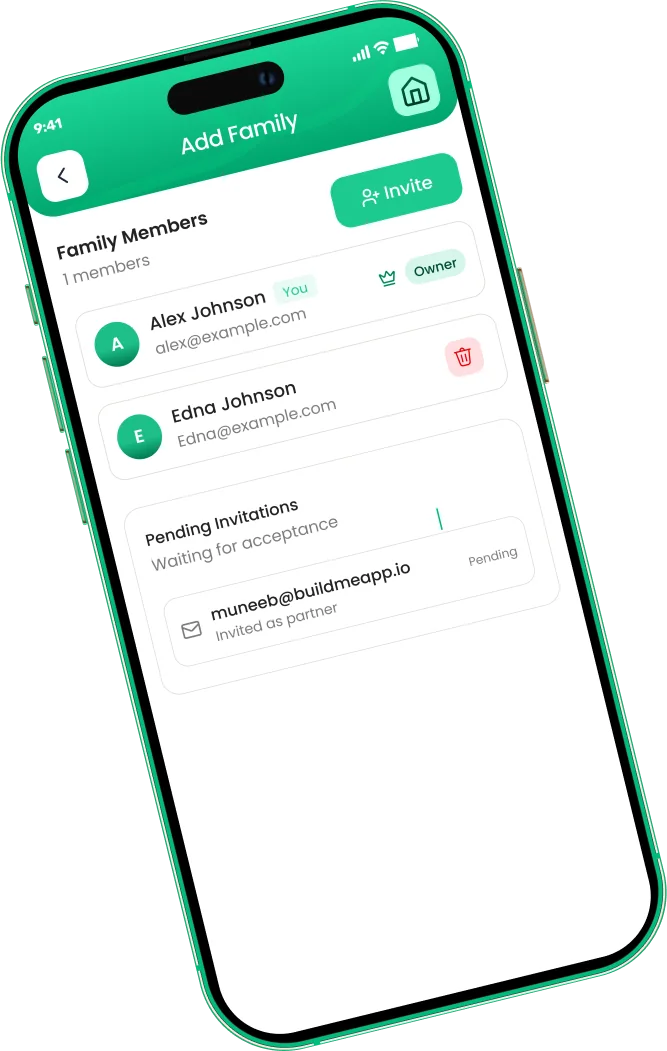
Budget together, with separate logins
- Invite a partner or family by email
- Everyone sees the same live budget
- Tag who spent what, free on every plan


Setting up a hybrid system step by step
- List every shared cost: housing, utilities, groceries, insurance, transport, child care and shared subscriptions.
- Add shared goals, such as an emergency fund, a vacation or a down payment.
- Agree how to split the total: 50/50, proportional to income or another method you both accept.
- Open a joint account and set up automatic transfers from each partner on payday.
- Pay every shared bill from the joint account.
- Keep personal accounts for individual spending, with no need to justify purchases.
- Review the setup together every few months and after any big change in income.
A shared budget keeps everyone on the same page. EMOH Pay's family sharing gives each partner a separate login to the same live budget on iPhone, Android and the web, with savings goals for joint targets. Our guide to budgeting for couples walks through setting the budget itself.
Canadian tax and legal points couples should know
In Canada, how you share money is your choice, but the Canada Revenue Agency's view of your relationship affects taxes and benefits. The CRA generally treats you as common-law once you have lived together in a conjugal relationship for 12 continuous months, or sooner if you share a child. From then on, benefits such as the GST/HST credit and the Canada Child Benefit are based on combined family net income.
You must tell the CRA when your marital status changes. Couples can also use tools such as a spousal RRSP to balance retirement income, which is covered in what is an RRSP. How property is divided if you separate is set by provincial family law, so for large joint purchases it may be worth getting independent legal advice.
Common mistakes when couples split money
- Never talking about it. Silent assumptions cause more conflict than any system.
- Hiding debt. Share balances and payment plans early; they affect joint goals and mortgage approval.
- Keeping score on small items. Agree the big split and let the small stuff go.
- No personal money. Even fully joint couples benefit from a small guilt-free allowance each.
- Never reviewing. Incomes and lives change; a split that was fair two years ago may not be now.
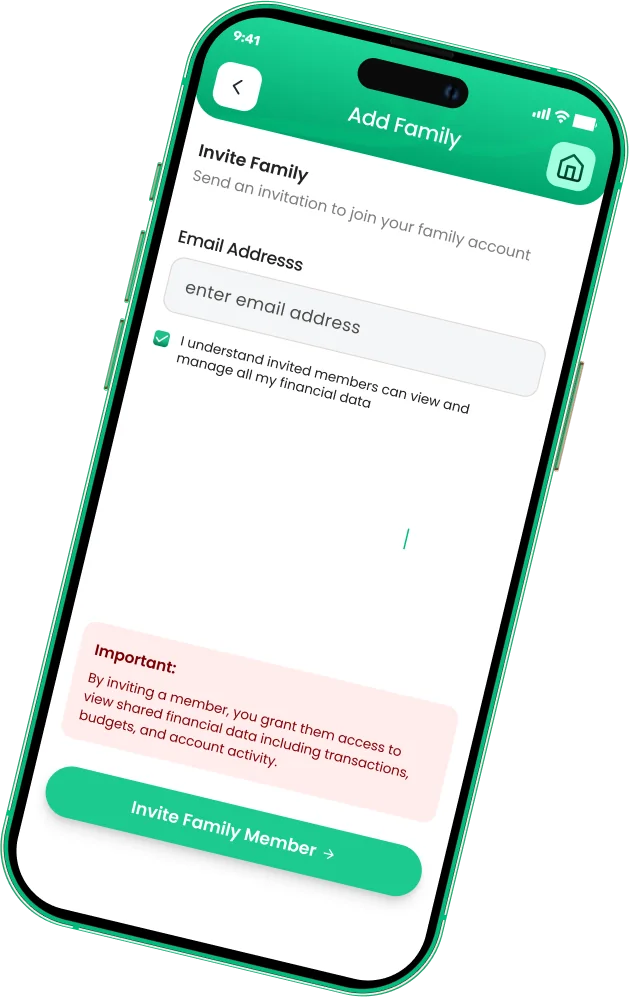
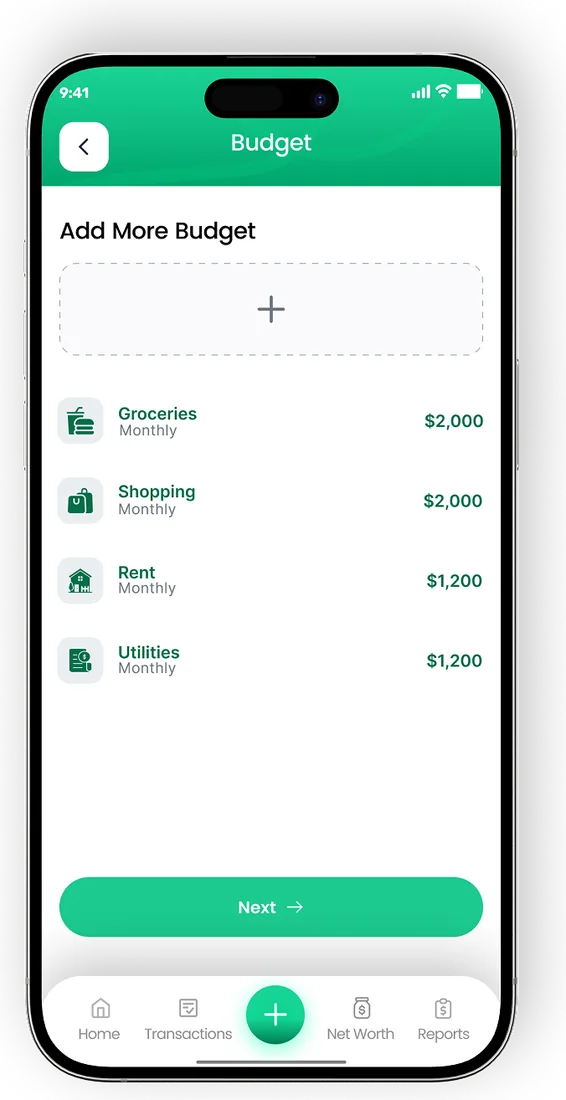
Budget together
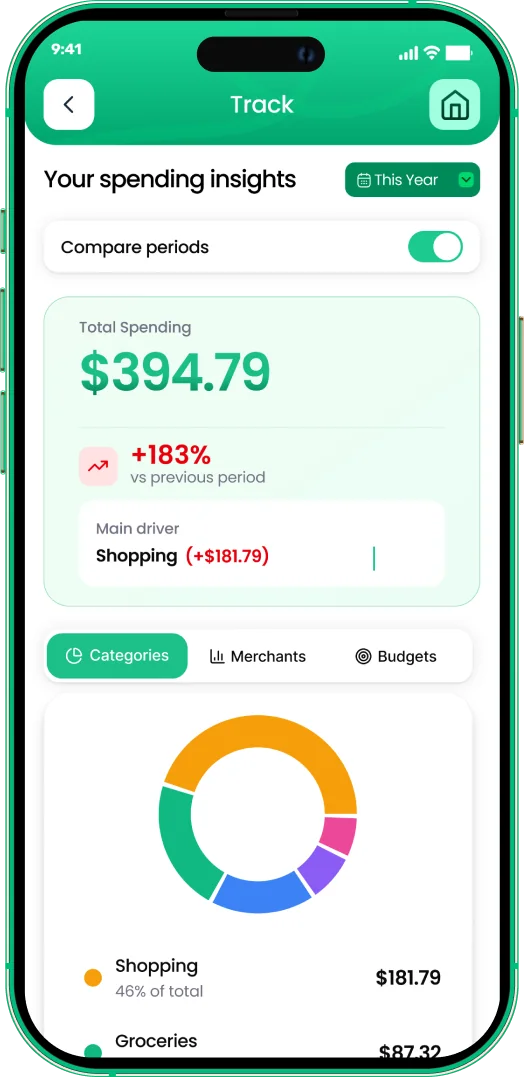

Put the numbers on autopilot
EMOH Pay tracks your spending, budgets and net worth on your phone and in the browser, always in sync. Free to start, made in Canada.
Get started free➜How to Split Finances as a Couple: frequently asked questions
Is it better for couples to have joint or separate accounts?
Neither is better for everyone. Many couples use both: a joint account for shared bills and goals, and personal accounts for individual spending.
What percentage should each partner contribute?
A proportional split is common. Each partner contributes the same percentage of take-home pay, so the higher earner pays more in dollars but both keep a fair share.
When does the CRA consider a couple common-law?
Generally after living together in a conjugal relationship for 12 continuous months, or sooner if you have a child together. Check the CRA's definitions for your case.
Should unmarried couples combine finances?
They can, but many keep more separate until the relationship is long-term. A hybrid system lets unmarried couples share costs without merging everything.
How often should couples review their money system?
At least once a year, and after any big change such as a new job, a move, a baby or paying off a large debt.
Sources and further reading
Related guides and tools
EMOH Pay helps couples budget together without merging everything — shared budgets for shared life, private space for…
Budgeting for Couples: A Guide to Financial HarmonyManaging money together can be one of the biggest challenges a couple faces. Conversations about finances can feel…
Managing Money as a CoupleYours, mine, ours — there's no single right structure, but there is a right process: transparency, shared goals, and…
Best Budgeting Apps for CouplesLooking for the best budget app for couples? Compare six shared budget apps on sharing, bank sync, price model and privacy…
How Couples Can Manage Money Together Without FightingMoney is the most common source of conflict in relationships — but it doesn’t have to be. In most cases, financial arguments…
How to Split Bills With RoommatesHow to split bills with roommates fairly: four methods for rent and utilities, worked examples, what to put in writing and…
Start free today
Free on iPhone, Android and the web. Upgrade to EMOH Pro anytime for bank sync and advanced AI.
Download for iOS➜ Get it on Android➜